The Forgotten Vision of Atomic Roads: How Nuclear Propulsion Could Reshape the Future of Transportation
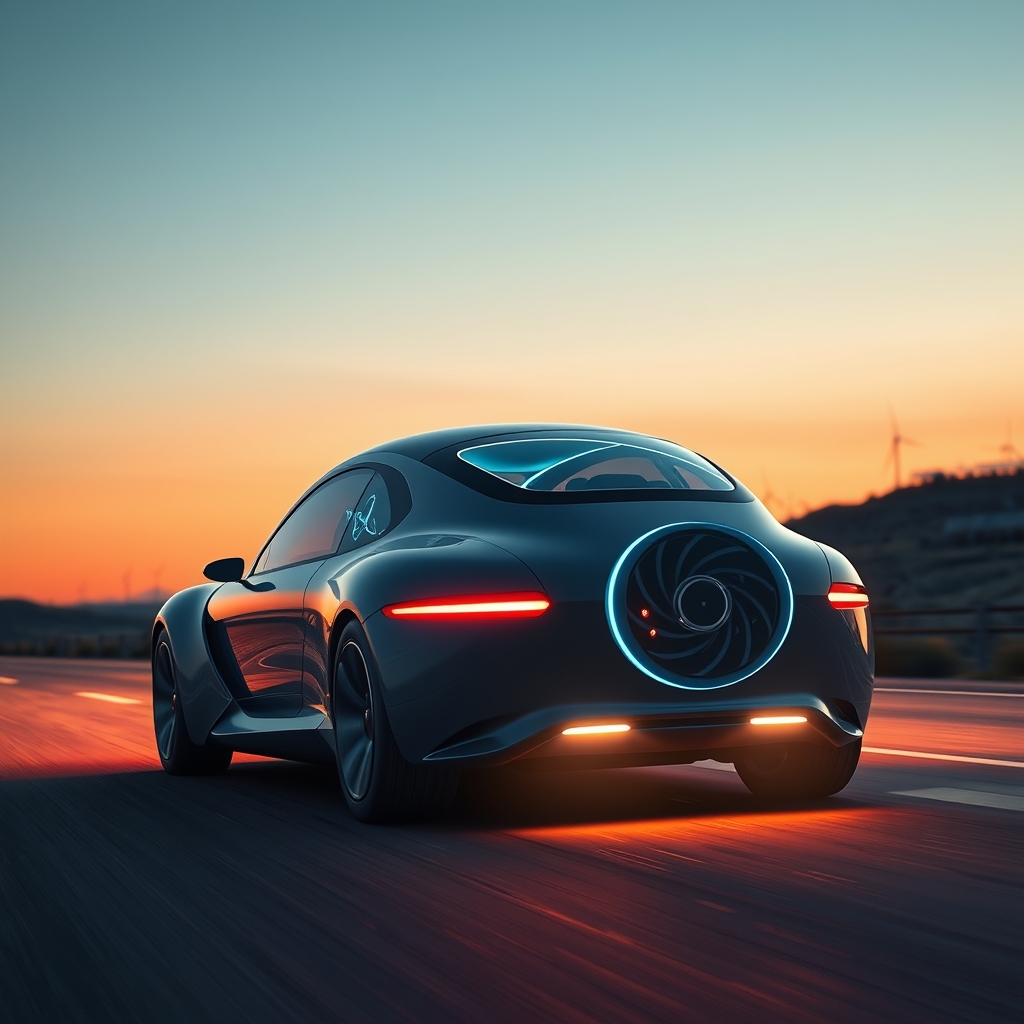
The idea of a car powered by nuclear energy might sound like science fiction, but it was once a serious pursuit of engineers and automakers. In the 1950s, as the world marveled at the potential of atomic power, the Ford Motor Company unveiled the Ford Nucleon Concept—a sleek, futuristic vehicle designed to run on a small nuclear reactor. Though it never left the drawing board, the Nucleon represented a bold vision: a world where cars could travel thousands of miles without refueling, where gasoline stations were obsolete, and where energy independence was a reality. Today, as concerns about climate change and fossil fuel dependence grow, the dream of nuclear-powered vehicles is experiencing a quiet resurgence.
The Science Behind Nuclear Automotive Propulsion
At the heart of nuclear-powered vehicles lies the principle of fission-powered propulsion. Unlike conventional engines that burn gasoline or diesel, a nuclear-powered car would rely on a controlled atomic reaction to generate heat, which could then be converted into mechanical or electrical energy. The most feasible approach for automotive applications is the Radioisotope Thermoelectric Generator (RTG), a technology already used in space exploration. RTGs convert heat from the decay of radioactive isotopes—such as plutonium-238—into electricity, providing a long-lasting and reliable power source.
For a car, however, an RTG would need to be scaled down significantly while maintaining safety and efficiency. Another promising concept is the Small Modular Reactor (SMR), a compact fission reactor that could theoretically power larger vehicles like trucks or even ships. SMRs are already being developed for grid electricity, and their adaptability makes them a compelling candidate for atomic-powered engines in transportation. The challenge lies in miniaturizing these reactors further without compromising their safety or output.
The Promise of Unlimited Range and Zero Emissions
One of the most tantalizing advantages of nuclear-powered vehicles is their potential for long-range travel. A car equipped with a uranium car battery or a miniature reactor could theoretically travel for decades without refueling. This would eliminate the need for frequent stops at charging stations or gas pumps, making cross-country road trips effortless and reducing the logistical challenges of long-haul transportation. For electric vehicles, which currently struggle with range anxiety and charging infrastructure, nuclear propulsion could be a game-changer.
Beyond range, nuclear-powered vehicles offer the promise of zero emissions. Unlike fossil fuels, which release carbon dioxide and other pollutants, nuclear reactions produce no direct greenhouse gases. This makes them an attractive option for combating climate change, particularly in industries where electrification is difficult, such as shipping, aviation, and heavy-duty trucking. If nuclear-powered cars were to become a reality, they could drastically reduce the transportation sector’s carbon footprint while providing unparalleled energy independence.
The Challenges: Safety, Regulation, and Public Perception
Despite its potential, nuclear automotive propulsion faces significant hurdles. The most pressing concern is safety. Nuclear reactors, even miniature ones, produce radiation, and the idea of millions of cars carrying radioactive materials on public roads raises serious questions about accidents, terrorism, and waste disposal. Engineers would need to develop robust depleted uranium shielding and fail-safe mechanisms to prevent leaks or meltdowns in the event of a crash. Additionally, the regulatory landscape for nuclear-powered vehicles is virtually nonexistent, as current laws are designed for stationary reactors, not mobile ones.
Public perception is another major obstacle. Nuclear energy has long been associated with disasters like Chernobyl and Fukushima, and many people remain skeptical of its safety. Convincing consumers to embrace nuclear-powered cars would require not only technological breakthroughs but also a shift in cultural attitudes. Automakers would need to demonstrate that these vehicles are not only safe but also practical, affordable, and superior to existing alternatives.
Innovations on the Horizon: From Concept to Reality
Despite the challenges, research into nuclear-powered transportation is quietly advancing. Startups and research institutions are exploring closed-loop nuclear propulsion systems, which recycle nuclear fuel to maximize efficiency and minimize waste. Others are investigating nuclear electric drive systems, where a reactor generates electricity to power electric motors, similar to how hybrid cars operate today. These innovations could pave the way for a new generation of self-powered nuclear cars that are both safe and sustainable.
Government agencies and defense contractors are also showing renewed interest in nuclear propulsion. The U.S. Department of Energy, for example, has funded projects to develop micro nuclear reactors for military applications, which could eventually trickle down to civilian use. Meanwhile, companies like Rolls-Royce are exploring nuclear-powered submarines and aircraft, proving that the technology is not as far-fetched as it once seemed.
The Road Ahead: A Nuclear-Powered Future?
The dream of a nuclear-powered car is not just a relic of the past—it may yet become a reality. While the Ford Nucleon Concept never made it to production, its vision of a world unshackled from fossil fuels remains compelling. As technology advances and the urgency of climate action grows, the idea of fission-powered automobiles is being revisited with fresh eyes. The challenges are immense, but so are the potential rewards: a transportation system that is cleaner, more efficient, and truly independent of finite resources.
Whether nuclear-powered vehicles will ever share the road with gasoline and electric cars remains uncertain. What is clear, however, is that the pursuit of this technology pushes the boundaries of innovation, forcing us to rethink what is possible. The atomic age may have begun in the 20th century, but its greatest impact on transportation could still lie ahead. The question is not whether we can build a nuclear-powered car, but whether we have the courage to try.