Reviving the Dream: The Future of Nuclear-Powered Vehicles and Their Untapped Potential
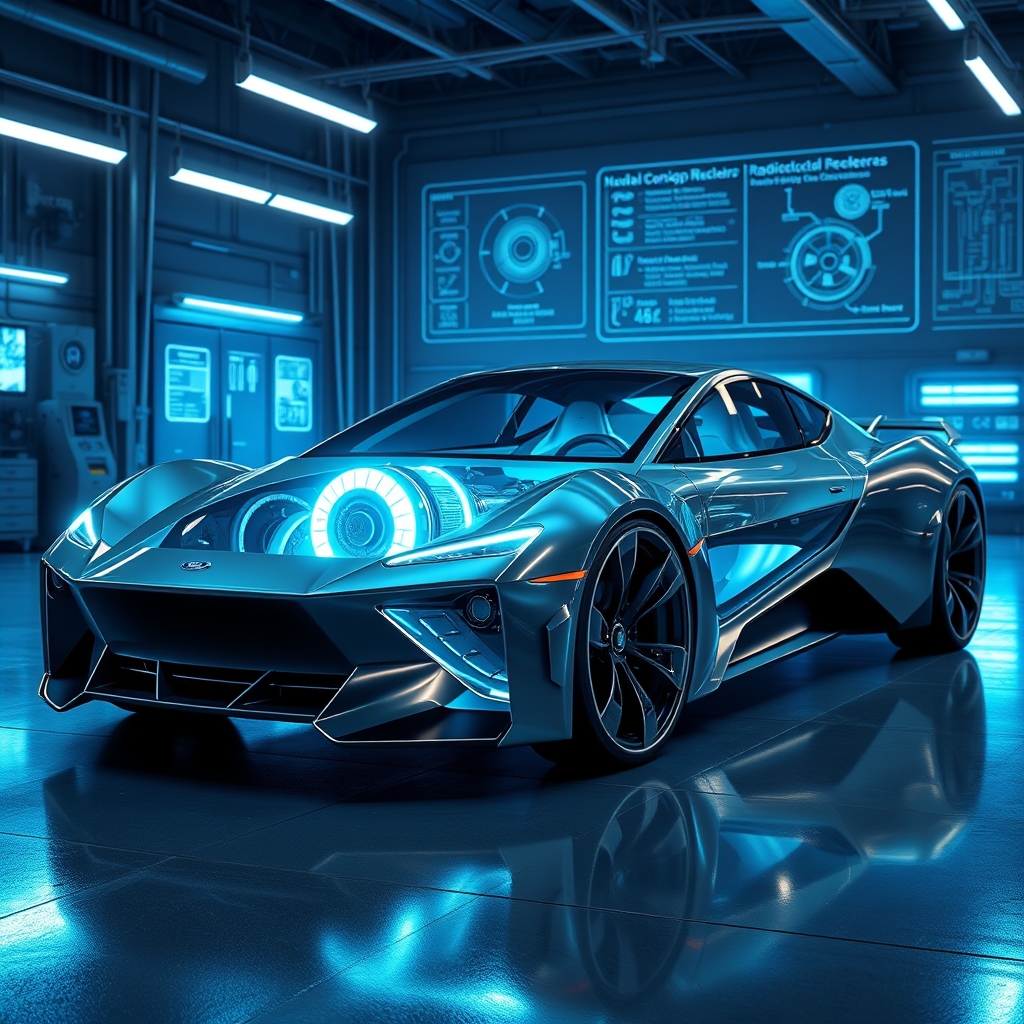
The idea of a nuclear-powered vehicle might sound like something straight out of a mid-20th-century sci-fi novel, but the concept has been explored—seriously—by engineers, automakers, and governments for decades. From the futuristic Ford Nucleon Concept of the 1950s to modern advancements in small modular reactor propulsion and radioisotope thermoelectric generators (RTGs), the dream of a car that could run for years without refueling is closer to reality than many realize. Yet, despite its promise, nuclear automotive propulsion remains a tantalizing “what if” in the history of transportation. So, what happened to this revolutionary idea, and could it still hold the key to a sustainable, long-range future for personal and commercial vehicles?
The Birth of Atomic Ambition: The Ford Nucleon and Early Experiments
In 1958, Ford unveiled the Nucleon, a concept car that replaced the traditional internal combustion engine with a miniature nuclear reactor. The design was radical: a compact fission reactor would generate steam to drive turbines, producing electricity for the car’s motors. The Nucleon promised a range of up to 5,000 miles on a single “charge” of uranium, a staggering figure compared to the 300-400 miles offered by today’s best electric vehicles. The car’s sleek, spaceship-like design captured the public’s imagination, embodying the optimism of the Atomic Age, where nuclear energy was seen as the solution to nearly every problem.
Ford was not alone in its atomic ambitions. The U.S. government and private companies experimented with nuclear-powered aircraft, submarines, and even locomotives. The Convair NB-36H, a modified bomber, flew with a working nuclear reactor on board (though it didn’t power the plane). These projects demonstrated that nuclear propulsion was technically feasible, but they also revealed significant challenges: weight, safety, and public perception. The Nucleon, for instance, was never built beyond a scale model. Its reactor would have been too heavy, and the risks of a nuclear accident—no matter how remote—were deemed unacceptable for consumer vehicles.
How Nuclear Power Works in Vehicles: From RTGs to Small Modular Reactors
Nuclear power in vehicles doesn’t necessarily mean a full-scale fission reactor under the hood. Several technologies have been proposed or tested, each with its own advantages and limitations:
Radioisotope Thermoelectric Generators (RTGs)
RTGs are the most proven nuclear power systems in vehicles, though not in the way most people imagine. These devices use the heat generated by the natural decay of radioactive isotopes (like plutonium-238) to produce electricity via thermocouples. RTGs have powered NASA’s deep-space probes, such as the Voyager spacecraft and the Perseverance Mars rover, for decades. While RTGs are too low-power for most automotive applications, they could theoretically be scaled up or combined with other technologies to create a self-powered nuclear car with a lifespan measured in years rather than hours.
Small Modular Reactors (SMRs) and Micro Nuclear Reactors
Advances in small modular reactor propulsion have reignited interest in nuclear-powered vehicles. SMRs are compact, factory-built reactors that can be deployed in remote locations or even on mobile platforms. Companies like NuScale and TerraPower are developing SMRs for grid power, but their technology could theoretically be adapted for large vehicles, such as trucks, ships, or even trains. A micro nuclear reactor designed for a car would need to be incredibly small, safe, and efficient—challenges that are still being tackled by researchers.
Uranium Fission Engines and Nuclear Electric Drives
A uranium fission engine would work similarly to the reactors in nuclear submarines or aircraft carriers, using controlled fission to generate heat, which is then converted into mechanical or electrical energy. The nuclear electric drive concept, for example, would use a reactor to power electric motors, eliminating the need for traditional fuel or large battery packs. This approach could offer the best of both worlds: the energy density of nuclear power and the efficiency of electric propulsion. However, shielding the reactor to protect passengers from radiation—using materials like depleted uranium shielding—would add significant weight and complexity.
The Challenges: Why Aren’t We Driving Nuclear Cars Yet?
Despite the allure of nearly limitless range and zero emissions, nuclear-powered vehicles face formidable obstacles. The most obvious is safety. A car accident involving a nuclear reactor—no matter how well-shielded—could have catastrophic consequences, both in terms of radiation exposure and public panic. Even a minor breach of the reactor’s containment could lead to environmental contamination, making nuclear cars a non-starter for regulators and the public alike.
Another major hurdle is infrastructure. Nuclear fuel, such as enriched uranium, requires specialized handling, storage, and disposal facilities. Unlike gasoline or electricity, which can be easily distributed and replenished, nuclear fuel would need a entirely new supply chain, complete with security measures to prevent theft or misuse. The cost of developing and maintaining this infrastructure would be astronomical, making nuclear cars impractical for widespread adoption.
Finally, there’s the issue of public perception. Nuclear energy is often associated with disasters like Chernobyl and Fukushima, despite its impressive safety record in modern reactors. Convincing consumers to trust a nuclear-powered car would require a massive shift in attitudes, as well as transparent communication about the risks and safeguards. Even then, the stigma might be too great to overcome.
Could Nuclear Cars Make a Comeback?
While the challenges are daunting, there are signs that nuclear-powered vehicles could find a niche in specific applications. The military, for example, has long used nuclear propulsion for submarines and aircraft carriers, and there’s no reason why similar technology couldn’t be adapted for long-range drones or unmanned ground vehicles. In the commercial sector, nuclear-powered ships are already being developed, with companies like Core Power exploring SMRs for cargo vessels. These applications benefit from the fact that they operate in controlled environments, far from population centers, and can justify the high costs and safety measures.
For consumer vehicles, the most plausible path forward might not be a full-scale reactor but a hybrid approach. A nuclear battery—a compact, sealed unit that uses radioactive decay to generate electricity—could supplement or replace traditional batteries in electric cars. While this wouldn’t provide the same range as a reactor, it could extend the life of a vehicle’s power source dramatically, reducing the need for frequent recharging. Startups like NDB (Nano Diamond Battery) are already exploring this concept, using radioactive waste to create long-lasting, self-charging batteries.
As the world grapples with climate change and the limitations of fossil fuels, the idea of nuclear-powered vehicles is experiencing a quiet renaissance. While a fission-powered automobile may never become a common sight on our roads, the technologies being developed today could pave the way for a new generation of long-range, low-emission vehicles. Whether through RTGs, SMRs, or nuclear batteries, the dream of a car that never needs refueling is still alive—just waiting for the right moment to reemerge from the realm of science fiction into reality. The road ahead is long and fraught with challenges, but the potential rewards—energy independence, reduced emissions, and unparalleled range—make it a journey worth pursuing. After all, the future of transportation has always been about pushing boundaries, and nuclear power might just be the next frontier.