The Silent Revolution: How Nuclear Battery Technology Could Redefine Long-Distance Travel
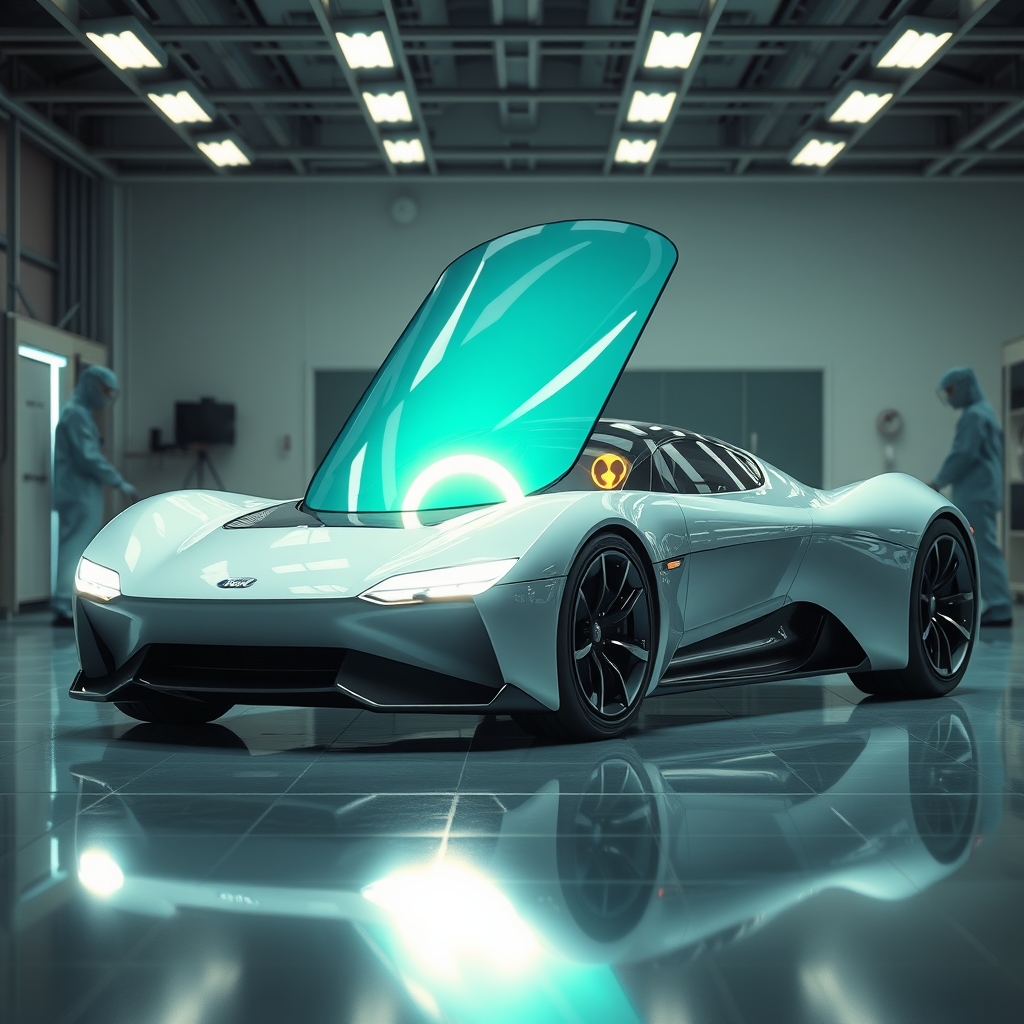
The idea of a car that never needs refueling sounds like science fiction, yet it edges closer to reality with every advancement in nuclear battery technology. While electric vehicles dominate conversations about sustainable transportation, a quieter revolution is brewing—one powered by the same atomic energy that has driven submarines and spacecraft for decades. The concept of a nuclear-powered vehicle isn’t new, but recent breakthroughs in radioisotope thermoelectric generators (RTGs) and small modular reactor propulsion are making it more plausible than ever.
The Legacy of the Ford Nucleon: A Dream Deferred
In 1958, Ford unveiled the Ford Nucleon Concept, a sleek, futuristic car designed to run on a uranium fission engine. The vehicle was never built, but its vision captivated the public imagination. The Nucleon promised a range of 5,000 miles on a single charge of enriched uranium, a tantalizing prospect in an era obsessed with atomic energy. However, the challenges—radiation shielding, public safety concerns, and the sheer size of the reactor—proved insurmountable at the time.
Today, those challenges are being revisited with fresh eyes. Modern materials science has given us depleted uranium shielding that is lighter and more effective, while advances in micro nuclear reactor design have shrunk the footprint of atomic power systems. The dream of a self-powered nuclear car is no longer confined to the pages of retro-futuristic brochures.
The Science Behind Nuclear Automotive Propulsion
At the heart of nuclear-powered vehicles lies the principle of radioisotope power systems (RPS). Unlike traditional combustion engines, which rely on chemical reactions, RPS harnesses the heat generated by the natural decay of radioactive isotopes like plutonium-238. This heat is converted into electricity via thermocouples, providing a steady, long-lasting power source. For automotive applications, this could mean a vehicle that runs for decades without refueling, emitting nothing but heat and a negligible amount of radiation.
Another promising avenue is closed-loop nuclear propulsion, where a small modular reactor (SMR) generates electricity to power an electric drive system. SMRs are compact, scalable, and designed for safety, with passive cooling systems that eliminate the risk of meltdowns. Companies like NuScale and TerraPower are already developing SMRs for grid power, but their potential in transportation is equally exciting. Imagine a semi-truck or a long-haul bus equipped with an SMR, capable of traveling across continents without stopping for fuel.
Overcoming the Radiation Challenge
One of the biggest hurdles to nuclear-powered vehicles is radiation. Early concepts like the Ford Nucleon required massive shielding to protect passengers, adding weight and complexity. However, modern solutions are far more elegant. Depleted uranium shielding, for instance, is denser than lead but can be shaped into thin layers, reducing bulk. Additionally, advances in nuclear battery technology have led to designs where the radioactive material is encapsulated in a way that minimizes exposure, even in the event of an accident.
Regulatory frameworks will also need to evolve. Current nuclear safety standards are designed for stationary power plants, not mobile reactors. Governments and industry leaders will need to collaborate to establish guidelines that ensure public safety without stifling innovation. The International Atomic Energy Agency (IAEA) has already begun exploring these issues, signaling a growing recognition of nuclear propulsion’s potential.
The Environmental and Economic Case
Proponents of nuclear-powered vehicles argue that they could be a game-changer for the environment. Unlike fossil fuels, nuclear energy produces no greenhouse gases during operation. Even when accounting for the mining and enrichment of uranium, the carbon footprint of a nuclear electric drive vehicle is a fraction of that of a gasoline or diesel car. For industries like shipping and aviation, where electrification is challenging, nuclear propulsion could offer a path to decarbonization.
Economically, the appeal is equally compelling. A vehicle that never needs refueling could drastically reduce operating costs for logistics companies. The upfront cost of a miniature nuclear reactor car would likely be high, but the long-term savings on fuel and maintenance could offset the initial investment. For remote communities or military applications, where fuel delivery is expensive or logistically difficult, nuclear-powered vehicles could be a lifeline.
The Road Ahead: Challenges and Opportunities
Despite the promise, significant obstacles remain. Public perception of nuclear energy is still shaped by disasters like Chernobyl and Fukushima, making acceptance of nuclear-powered vehicles a steep climb. There are also technical hurdles, such as ensuring the durability of radioisotope thermoelectric generators in the harsh conditions of a moving vehicle. Battery efficiency, heat management, and waste disposal are all areas that require further research.
Yet, the momentum is undeniable. Startups like Atomic Motors and research initiatives at institutions like MIT are exploring novel approaches to atomic energy vehicles. The U.S. Department of Energy has even funded projects to develop micro nuclear reactors for military and space applications, with potential spillover into civilian transportation. As battery technology improves and public trust in nuclear energy grows, the pieces of the puzzle are slowly falling into place.
The journey toward a long-range nuclear car is not without its detours, but the destination is worth pursuing. In a world grappling with climate change and energy insecurity, the idea of a vehicle that can travel for decades on a single charge is more than a technological marvel—it’s a beacon of possibility. Whether it’s a passenger car, a freight truck, or an unmanned exploration rover, the fusion of atomic power and automotive engineering could redefine what it means to move through the world. The road ahead is long, but the wheels are already in motion.