Driving the Green Revolution: Innovations in Gaseous Fuel Technologies for Cleaner Transport
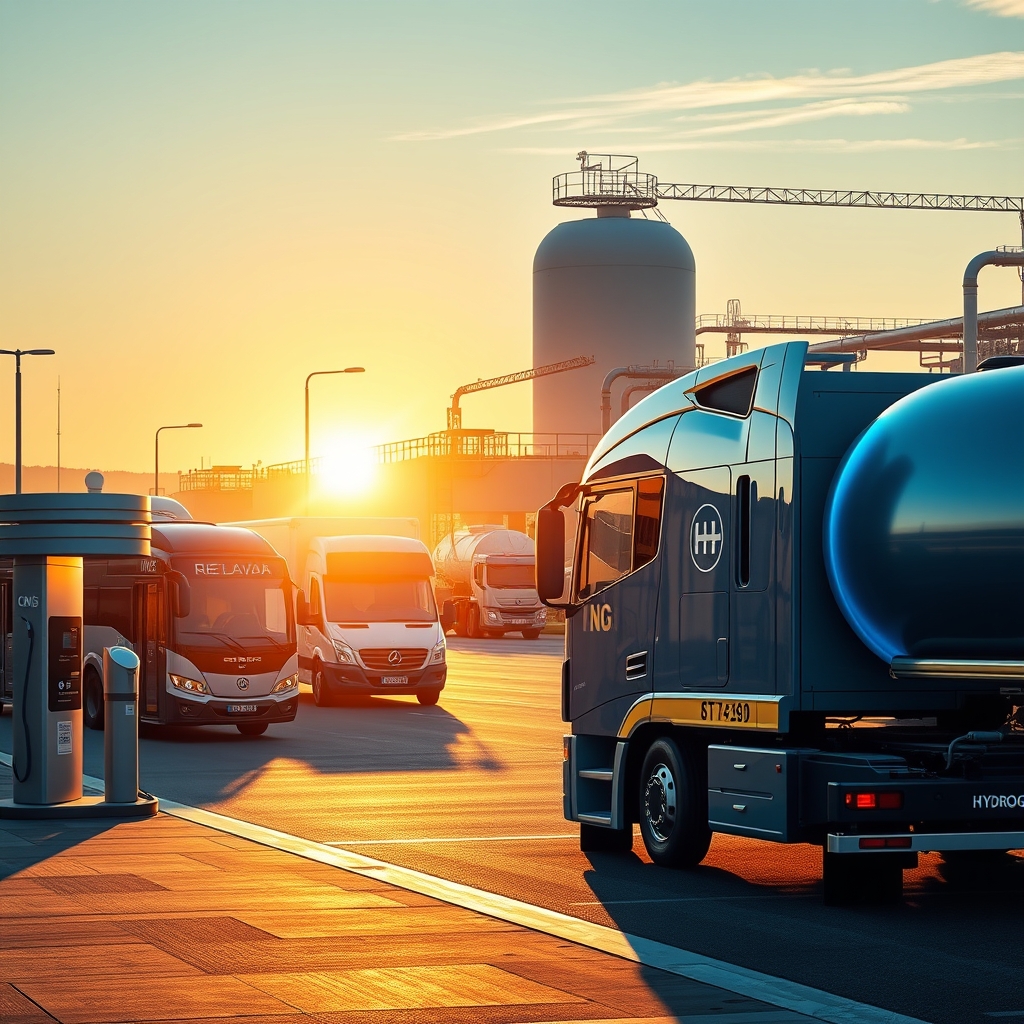
The transportation sector stands at a crossroads, with the urgent need to reduce carbon emissions clashing against the growing demand for mobility. While electric vehicles (EVs) have dominated conversations about sustainable transport, gaseous fuels are emerging as a powerful, often overlooked alternative. These fuels—ranging from compressed natural gas (CNG) to hydrogen—offer a bridge between today’s fossil fuel-dependent infrastructure and a zero-emission future. Their versatility, lower emissions, and compatibility with existing engine technologies make them a compelling choice for fleets, commercial vehicles, and even passenger cars.
The Rise of Compressed Natural Gas (CNG) and Liquefied Petroleum Gas (LPG)
CNG and LPG have long been staples in the alternative fuel landscape, particularly in regions with abundant natural gas reserves. CNG, primarily composed of methane, is stored under high pressure in specialized tanks, making it ideal for urban buses, taxis, and delivery trucks. Its combustion produces significantly fewer pollutants than gasoline or diesel, including up to 25% less carbon dioxide (CO₂) and virtually no particulate matter. LPG, a byproduct of natural gas processing and crude oil refining, offers similar benefits. It is widely used in Europe and Asia, where it is often referred to as Autogas, powering everything from private cars to agricultural machinery.
One of the key advantages of CNG and LPG is their adaptability. Many vehicles can be retrofitted with a CNG conversion kit or an LPG Autogas system, allowing drivers to switch between gaseous fuels and traditional liquid fuels. This dual-fuel capability provides flexibility, especially in areas where refueling infrastructure is still developing. Moreover, advancements in direct injection gas engines and gas fuel injection systems have improved efficiency and performance, narrowing the gap between gaseous fuels and their liquid counterparts.
Liquefied Natural Gas (LNG): Powering Long-Haul Transport
For heavy-duty applications like shipping and long-haul trucking, liquefied natural gas (LNG) is gaining traction. By cooling natural gas to -162°C (-260°F), it is condensed into a liquid, reducing its volume by 600 times and making it feasible for large-scale transport. LNG-powered trucks can travel up to 1,000 miles on a single tank, a range that rivals diesel while emitting up to 30% less CO₂. The maritime industry is also exploring LNG as a cleaner alternative to heavy fuel oil, with major shipping companies investing in LNG-powered vessels to comply with stricter emissions regulations.
However, LNG’s adoption is not without challenges. The need for cryogenic fuel storage systems and specialized refueling infrastructure requires significant investment. Additionally, while LNG reduces emissions compared to diesel, it is still a fossil fuel, and its long-term sustainability depends on the development of renewable natural gas (RNG) or synthetic natural gas (SNG). These alternatives, derived from organic waste or power-to-gas technologies, offer a carbon-neutral pathway for LNG, aligning it with global decarbonization goals.
Hydrogen: The Zero-Emission Game Changer
Hydrogen is often hailed as the ultimate clean fuel, with the potential to revolutionize transportation. When used in a hydrogen fuel cell vehicle (FCEV), hydrogen combines with oxygen to produce electricity, emitting only water vapor as a byproduct. Unlike battery-electric vehicles, FCEVs can be refueled in minutes and offer a range comparable to conventional cars, making them ideal for applications where downtime is costly, such as public transit and logistics.
Yet, hydrogen’s promise is tempered by significant hurdles. The production of green hydrogen—made using renewable electricity to split water into hydrogen and oxygen—remains expensive and energy-intensive. Most hydrogen today is produced from natural gas, a process that generates CO₂ unless paired with carbon capture technologies. Additionally, the lack of green hydrogen infrastructure, including refueling stations and pipelines, limits widespread adoption. Despite these challenges, countries like Japan, Germany, and the United States are investing heavily in hydrogen hubs and pilot projects, signaling a long-term commitment to this technology.
Hydrogen Internal Combustion Engines: A Bridge to the Future
While fuel cells dominate the hydrogen conversation, hydrogen internal combustion engines (HICE) are emerging as a transitional technology. These engines burn hydrogen directly, similar to gasoline or diesel, but with near-zero CO₂ emissions. HICE vehicles can leverage existing internal combustion engine (ICE) manufacturing infrastructure, reducing the need for costly retooling. Companies like Toyota and Cummins are exploring HICE for trucks and industrial applications, where the technology’s robustness and familiarity offer a practical advantage over fuel cells.
However, HICE is not without drawbacks. Hydrogen combustion can produce nitrogen oxides (NOₓ), though at lower levels than diesel. Additionally, hydrogen’s low energy density requires larger, high-pressure tanks, posing challenges for vehicle design. Despite these limitations, HICE represents a pragmatic step toward hydrogen adoption, particularly in sectors where fuel cells may not yet be viable.
Biomethane and Renewable Natural Gas: Closing the Carbon Loop
For gaseous fuels to truly contribute to sustainability, they must move beyond fossil-based sources. Biomethane and renewable natural gas (RNG) offer a solution by capturing methane from organic waste—such as agricultural residues, landfills, and wastewater treatment plants—and upgrading it to pipeline-quality gas. When used as a vehicle fuel, biomethane is carbon-neutral, as the CO₂ emitted during combustion is offset by the CO₂ absorbed during the growth of the organic matter.
Countries like Sweden and Germany are leading the way in biomethane adoption, with fleets of buses and trucks running on RNG. In the United States, the Renewable Fuel Standard (RFS) incentivizes RNG production, driving growth in the sector. The beauty of biomethane lies in its circularity: it turns waste into a valuable resource while reducing greenhouse gas emissions. As technology improves, the cost of producing biomethane is expected to decline, making it an increasingly attractive option for fleets and municipalities.
The Role of Infrastructure in Scaling Gaseous Fuels
No matter how promising a fuel may be, its success hinges on infrastructure. Gaseous fuels require a network of refueling stations, storage facilities, and distribution pipelines to compete with liquid fuels. For CNG and LPG, this infrastructure is relatively mature in many parts of the world, but hydrogen and LNG face steeper barriers. Governments and private companies are beginning to address this gap through public-private partnerships, such as the European Union’s Alternative Fuels Infrastructure Directive and the U.S. Department of Energy’s Hydrogen Shot initiative.
Innovations like liquefied gas vaporizers and modular refueling stations are making it easier to deploy gaseous fuel infrastructure in remote or underserved areas. For hydrogen, the development of liquid organic hydrogen carriers (LOHCs) could simplify storage and transport, reducing the need for high-pressure tanks or cryogenic systems. As these technologies mature, they will play a critical role in scaling gaseous fuels and making them accessible to a broader range of users.
The shift toward gaseous fuels is not just about replacing one energy source with another; it’s about reimagining the entire transportation ecosystem. From the high-pressure tanks of CNG vehicles to the fuel cells of hydrogen-powered trucks, these technologies offer a pathway to cleaner air, lower emissions, and greater energy security. While challenges remain—whether in production, infrastructure, or cost—the progress made in recent years is undeniable. As governments, industries, and consumers increasingly prioritize sustainability, gaseous fuels will play an essential role in driving the green revolution forward, one mile at a time.