Wired for the Future: How Automotive Wiring Harnesses and High Voltage Cabling Are Shaping the Electric Vehicle Ecosystem
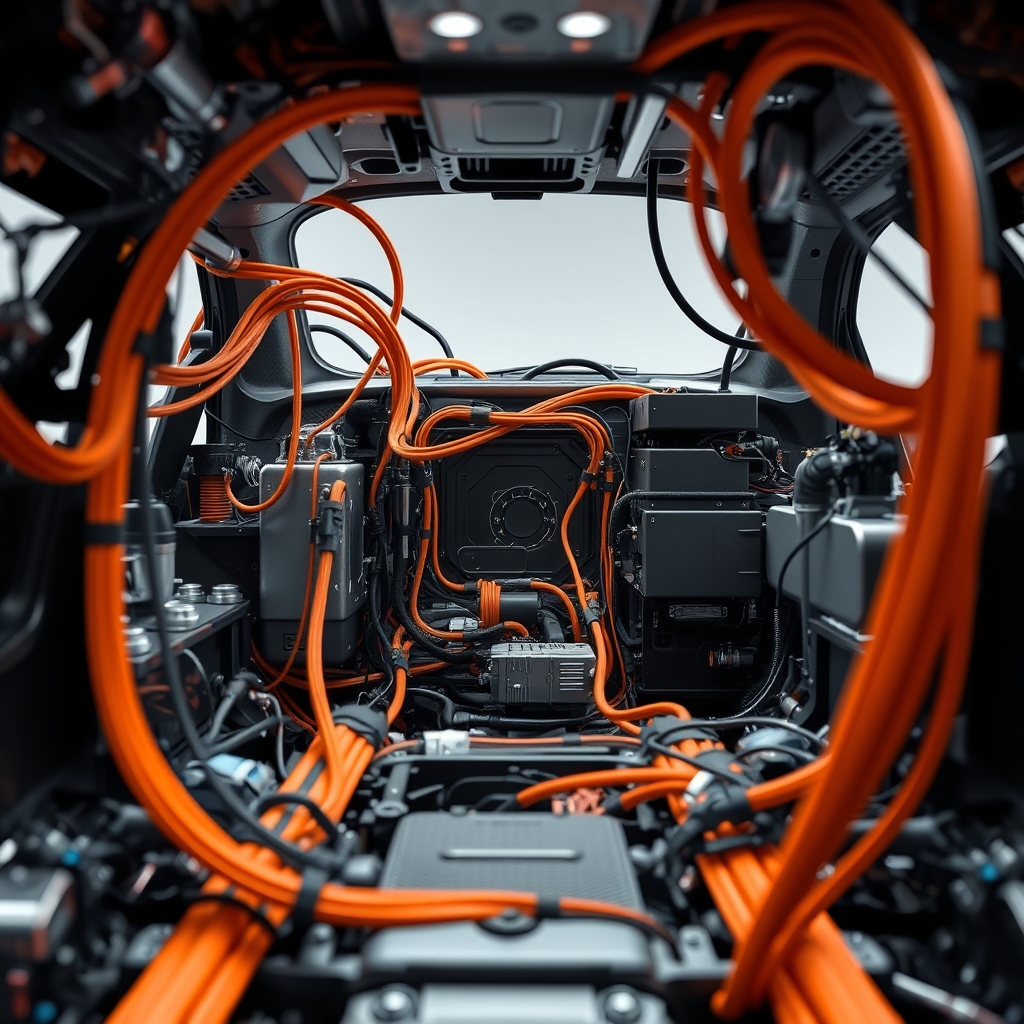
The electric vehicle (EV) revolution is not just about batteries and motors—it’s about the intricate, often overlooked systems that make these innovations possible. At the heart of this transformation lies the automotive wiring harness and high voltage cabling, the unsung heroes that ensure seamless power distribution, data transmission, and safety across the entire vehicle architecture. Without these critical components, the advanced technologies driving modern EVs—from regenerative braking systems to autonomous driving hardware—would simply not function.
The Backbone of Electric Vehicle Architecture
An automotive wiring harness is far more than a bundle of wires; it is a meticulously engineered network that connects every electrical and electronic component in a vehicle. In traditional internal combustion engine (ICE) vehicles, wiring harnesses primarily manage low-voltage systems like lighting, infotainment, and basic sensors. However, in EVs, the demands are exponentially greater. High voltage cabling must safely transmit power from the battery pack to the electric drive module, power inverter module, and on-board charger, all while maintaining efficiency and minimizing energy loss.
The shift to electric propulsion has also introduced new challenges in vehicle design. Unlike ICE vehicles, where the engine and drivetrain dominate the mechanical layout, EVs distribute power electronically, requiring a more complex and flexible wiring infrastructure. This has led to innovations in harness design, including modular and lightweight materials that reduce weight while improving durability. For instance, aluminum wiring is increasingly used in high-voltage applications to cut down on weight without compromising conductivity.
High Voltage Cabling: The Lifeline of Electric Propulsion
High voltage cabling is the lifeline of an EV, responsible for delivering power from the battery to the motor and other critical systems. These cables must withstand extreme conditions, including high currents, temperature fluctuations, and mechanical stress, all while ensuring minimal power loss. The insulation materials used in these cables are designed to prevent electrical leakage, short circuits, and even fire hazards, making them a critical safety component.
One of the most significant advancements in high voltage cabling is the development of shielded cables. These cables feature an additional layer of insulation and shielding to protect against electromagnetic interference (EMI), which can disrupt the performance of sensitive electronic control units (ECUs) and advanced driver assistance systems (ADAS). As EVs become more connected and autonomous, the need for EMI-resistant cabling will only grow, ensuring that data from automotive sensor networks and controller area network (CAN) buses remains uninterrupted.
Thermal Management and Safety Considerations
High voltage systems generate significant heat, which can degrade cable performance and pose safety risks. To mitigate this, modern EVs incorporate advanced thermal management systems that monitor and regulate cable temperatures. Some high-voltage cables are even equipped with integrated cooling channels or heat-resistant materials like silicone or cross-linked polyethylene (XLPE) to maintain optimal operating conditions.
Safety is another critical factor in high voltage cabling design. Unlike low-voltage systems, high-voltage cables must be clearly marked and physically isolated to prevent accidental contact. Many EVs use orange-colored insulation for high-voltage cables to signal their potential danger, while also incorporating fail-safes like automatic disconnects in the event of a collision or electrical fault.
The Role of Wiring Harnesses in Smart Charging and V2G Technology
As EVs evolve, so too does the infrastructure that supports them. Smart charging infrastructure and vehicle-to-grid (V2G) technology are transforming how EVs interact with the energy grid, and wiring harnesses play a pivotal role in enabling these innovations. For example, bidirectional charging systems require specialized wiring to handle both power input (charging) and output (discharging to the grid), adding another layer of complexity to harness design.
Wireless vehicle charging is another emerging technology that relies on advanced wiring solutions. While the charging itself is contactless, the vehicle’s internal wiring must still efficiently transfer power from the receiver coil to the battery pack. This requires precise engineering to minimize energy loss and ensure compatibility with the vehicle’s existing electrical architecture.
Integration with Advanced Driver Assistance Systems
Advanced driver assistance systems (ADAS) and autonomous driving hardware depend on a robust and reliable wiring infrastructure to function. Sensors, cameras, and radar systems generate vast amounts of data that must be transmitted in real-time to the vehicle’s ECUs for processing. A well-designed wiring harness ensures that this data flows seamlessly, enabling features like adaptive cruise control, lane-keeping assist, and automated emergency braking.
Moreover, the rise of digital instrument clusters and connected car technologies has further increased the demand for high-speed data transmission. Modern wiring harnesses now incorporate fiber optic cables and Ethernet connections to support these bandwidth-intensive applications, ensuring that drivers have access to real-time information and over-the-air updates.
The Future: Lightweight, Modular, and Intelligent Wiring Solutions
The next generation of automotive wiring harnesses and high voltage cabling will be defined by three key trends: lightweight materials, modular design, and intelligent monitoring. As automakers strive to improve EV range and efficiency, reducing the weight of wiring harnesses has become a priority. Carbon fiber-reinforced plastics and advanced composites are being explored as alternatives to traditional copper wiring, offering significant weight savings without sacrificing performance.
Modular wiring harnesses are another innovation on the horizon. These systems allow for easier customization and scalability, enabling automakers to adapt a single harness design across multiple vehicle platforms. This not only reduces manufacturing costs but also simplifies repairs and upgrades, making EVs more accessible and sustainable in the long run.
Finally, the integration of smart sensors and IoT technology into wiring harnesses is set to revolutionize vehicle diagnostics and maintenance. These intelligent systems can monitor the health of individual wires and connectors in real-time, predicting failures before they occur and alerting drivers or service centers. This proactive approach to maintenance could drastically reduce downtime and improve the overall reliability of EVs.
The electric vehicle ecosystem is a symphony of interconnected systems, each playing a vital role in delivering performance, safety, and efficiency. While batteries and motors often steal the spotlight, the wiring harness and high voltage cabling are the silent conductors that make it all possible. As technology continues to advance, these components will evolve in ways we can only begin to imagine, ensuring that the vehicles of tomorrow are not just electric, but truly extraordinary.