The Silent Revolution: How Real-Time Fuel Monitoring is Transforming Engine Intelligence
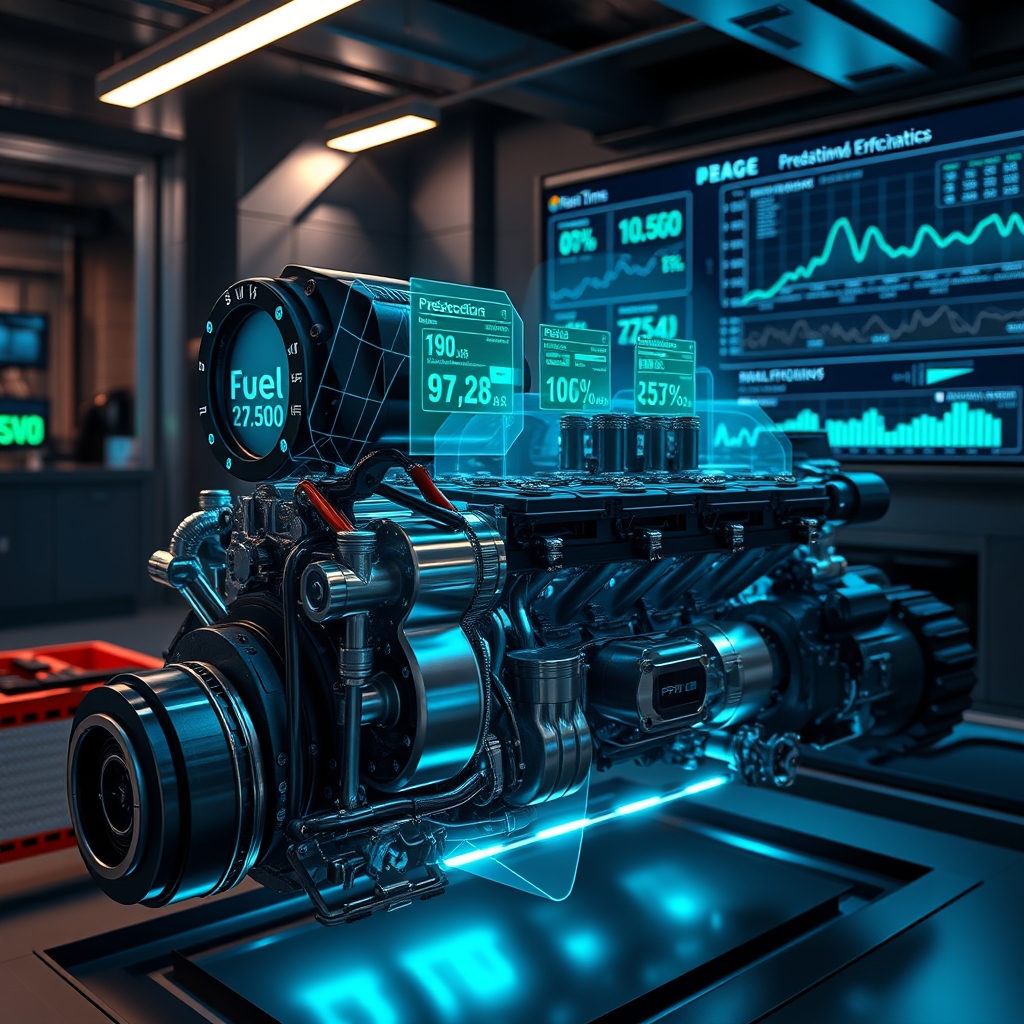
In the relentless pursuit of engine efficiency, the marriage of technology and combustion science has given rise to a silent revolution—one that unfolds in milliseconds, hidden within the intricate dance of fuel and air. At the heart of this transformation lies real-time fuel monitoring, a dynamic system that doesn’t just observe but actively reshapes how engines consume energy. Gone are the days when fuel efficiency was a static metric, measured in retrospect. Today, it’s a living, breathing process, constantly recalibrating to deliver power without waste.
The Pulse of Precision: How Real-Time Data Redefines Combustion
Traditional engine management systems operate on pre-programmed maps, relying on historical data to make decisions. While effective, this approach is inherently reactive, unable to adapt to the unpredictable variables of real-world driving—sudden acceleration, fluctuating loads, or even changes in ambient temperature. Real-time fuel monitoring flips this paradigm by embedding sensors and algorithms directly into the combustion process, creating a feedback loop that adjusts fuel delivery with surgical precision.
At the core of this system are high-resolution sensors that track everything from fuel flow rates to exhaust gas composition. These sensors feed data into an onboard processor, which analyzes the information in real time, comparing it against optimal combustion models. If the system detects inefficiencies—such as incomplete combustion or excessive fuel injection—it instantly recalibrates the fuel-air mixture, ignition timing, or even the turbocharger boost pressure. The result? A seamless fusion of adaptive fuel injection and predictive engine performance, where the engine doesn’t just perform better—it learns and evolves.
The Role of Machine Learning in Fuel Optimization
What sets modern real-time monitoring apart is its ability to leverage machine learning. Unlike static engine maps, machine learning algorithms continuously refine their understanding of an engine’s behavior, identifying patterns that human engineers might overlook. For instance, the system can detect that a particular driving style—say, aggressive acceleration followed by coasting—leads to suboptimal fuel burn. Over time, it adjusts the engine’s response to smooth out these inefficiencies, effectively teaching the engine to operate more intelligently.
This level of adaptability is particularly valuable in hybrid and electric vehicles, where the interaction between internal combustion engines and electric motors adds another layer of complexity. Real-time monitoring ensures that the engine operates at its most efficient point, whether it’s powering the wheels directly or charging the battery. The outcome is a harmonious balance between sustainable fuel integration and high-performance energy usage, where every drop of fuel is used to its fullest potential.
Beyond Efficiency: The Environmental and Economic Impact
The benefits of real-time fuel monitoring extend far beyond the engine bay. By optimizing combustion efficiency, these systems directly contribute to carbon footprint reduction, a critical consideration in an era of tightening emissions regulations. When fuel is burned more completely, fewer unburned hydrocarbons and nitrogen oxides are released into the atmosphere. This not only helps manufacturers meet stringent environmental standards but also positions them as leaders in eco-conscious engine operation.
From an economic standpoint, the advantages are equally compelling. Fleet operators, for example, can see immediate reductions in fuel consumption, translating to lower operational costs. Long-haul trucking companies have reported fuel savings of up to 8% after implementing real-time monitoring systems, a figure that can amount to millions of dollars in savings annually. For individual drivers, the impact is subtler but no less significant—better fuel economy means fewer trips to the pump and more money in their pockets.
The Synergy with Predictive Maintenance
Real-time fuel monitoring doesn’t operate in isolation. It’s part of a broader ecosystem of integrated engine diagnostics that includes predictive maintenance. By continuously analyzing fuel consumption patterns, the system can detect anomalies that may indicate impending mechanical issues. For instance, a sudden increase in fuel consumption could signal a clogged fuel injector or a failing oxygen sensor. Instead of waiting for a breakdown, the system alerts the driver or fleet manager, allowing for proactive repairs that prevent costly downtime.
This synergy between monitoring and maintenance is a game-changer for industries reliant on heavy machinery, such as construction, agriculture, and shipping. In these sectors, equipment failure isn’t just an inconvenience—it’s a direct hit to productivity and profitability. Real-time monitoring acts as an early warning system, ensuring that engines remain in peak condition while maximizing efficient power delivery.
The Road Ahead: Smarter Engines, Smarter Choices
As technology continues to advance, the capabilities of real-time fuel monitoring will only expand. Future iterations may incorporate even more sophisticated sensors, capable of detecting minute variations in fuel quality or atmospheric conditions. Imagine an engine that adjusts its combustion strategy based on the octane rating of the fuel or the humidity in the air—this is the next frontier of responsive engine calibration.
Moreover, the integration of vehicle-to-everything (V2X) communication could take real-time monitoring to a new level. Engines could share data with traffic systems, road infrastructure, or even other vehicles, creating a dynamic network that optimizes fuel consumption across entire fleets or traffic flows. For example, a truck approaching a hill might receive data from a vehicle ahead, allowing it to adjust its fuel delivery preemptively, reducing the need for sudden, fuel-guzzling acceleration.
The journey toward smarter, more efficient engines is not just about technology—it’s about redefining our relationship with energy. Real-time fuel monitoring is more than a tool; it’s a paradigm shift, one that challenges us to think differently about how we power our world. As engines become more intelligent, they don’t just consume fuel—they understand it, adapt to it, and ultimately, make every drop count. In this silent revolution, the engine of the future isn’t just a machine; it’s a partner in progress, driving us toward a more sustainable and efficient tomorrow.