The Hidden Shield: How Depleted Uranium Could Revolutionize Nuclear-Powered Vehicles
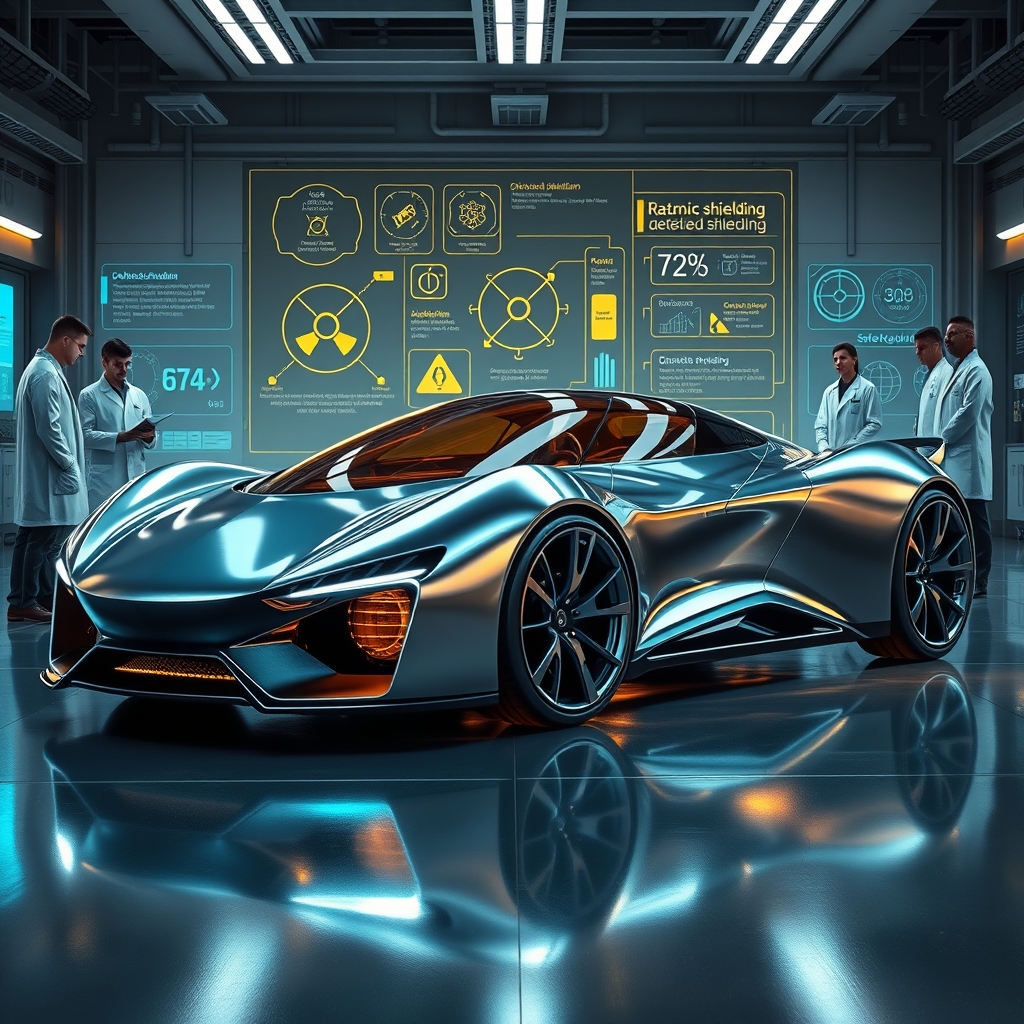
For decades, the idea of nuclear-powered vehicles has captivated engineers, futurists, and automotive enthusiasts alike. The promise of near-limitless range, zero emissions, and unparalleled endurance has kept the concept alive, even as practical challenges have delayed its realization. Yet, one of the most critical—and often overlooked—components of making atomic automobiles a reality is shielding. Without effective protection from radiation, nuclear propulsion remains a distant dream. Enter depleted uranium: a material that could be the key to unlocking the next era of automotive innovation.
The Radiation Challenge
Nuclear propulsion, whether through small modular reactors (SMRs), radioisotope thermoelectric generators (RTGs), or uranium fission engines, relies on harnessing the immense energy released by atomic reactions. However, this energy comes with a significant caveat: radiation. Gamma rays, neutrons, and other forms of ionizing radiation pose serious risks to passengers, pedestrians, and the environment. Traditional shielding materials like lead or concrete are effective but impractical for vehicles due to their weight and bulk. This is where depleted uranium (DU) steps in as a game-changer.
Why Depleted Uranium?
Depleted uranium is a byproduct of the uranium enrichment process, where the fissile isotope U-235 is separated from natural uranium, leaving behind U-238. While U-238 is less radioactive than its enriched counterpart, it retains exceptional density—nearly twice that of lead. This density makes it an ideal candidate for radiation shielding, as it can absorb and deflect radiation more efficiently than lighter materials. In fact, DU has already been used in military applications, such as armor-piercing ammunition and tank shielding, proving its effectiveness in high-stress environments.
The Science Behind DU Shielding
When it comes to shielding nuclear-powered vehicles, the goal is to create a barrier that can attenuate radiation without adding excessive weight or volume. Depleted uranium excels in this regard due to its high atomic number (92) and density (19.1 g/cm³). These properties allow DU to interact with gamma rays and neutrons in ways that lighter materials cannot. For instance, gamma rays are absorbed through photoelectric effects and Compton scattering, while neutrons are slowed and captured by the dense atomic structure of DU.
Layered Protection
Effective shielding in a nuclear-powered vehicle would likely involve a multi-layered approach. Depleted uranium could serve as the primary shield, surrounded by lighter materials like boron carbide or polyethylene to absorb neutrons and further reduce radiation levels. This combination would create a compact, efficient barrier that could be integrated into the vehicle’s chassis or engine compartment. The result? A safer, more practical nuclear-powered automobile that doesn’t sacrifice performance for protection.
From Concept to Reality: The Ford Nucleon Legacy
The idea of nuclear-powered cars isn’t new. In the 1950s, Ford unveiled the Nucleon concept, a futuristic vehicle designed to run on a small nuclear reactor. While the Nucleon never made it past the prototype stage, it sparked a conversation about the possibilities of atomic propulsion. Today, with advancements in materials science and nuclear engineering, the dream of a fission-powered automobile is closer than ever. Depleted uranium shielding could be the missing piece that transforms these concepts into road-ready realities.
Modern Applications
Beyond personal vehicles, depleted uranium shielding could revolutionize other forms of nuclear-powered transportation. For example, long-haul trucks, ships, and even aircraft could benefit from the compact, lightweight protection that DU offers. In the maritime industry, where nuclear propulsion is already used in submarines and aircraft carriers, DU shielding could enhance safety and efficiency. Similarly, in aviation, where weight is a critical factor, DU could enable the development of nuclear-powered planes with unprecedented range and endurance.
Overcoming Public Perception
Despite its potential, depleted uranium is not without controversy. Its association with military applications and concerns about radioactivity have led to skepticism among the public. However, it’s important to note that DU is significantly less radioactive than natural uranium and poses minimal risk when properly contained. Education and transparency will be key to overcoming these misconceptions and gaining public acceptance for nuclear-powered vehicles.
Regulatory and Safety Considerations
Integrating depleted uranium into civilian vehicles would require rigorous safety standards and regulatory oversight. Governments and industry leaders would need to collaborate to establish guidelines for the use, transportation, and disposal of DU shielding. Additionally, advancements in fail-safe reactor designs and emergency protocols would be essential to ensure the safety of passengers and the environment. With the right safeguards in place, DU could pave the way for a new generation of clean, efficient, and long-lasting vehicles.
As we stand on the brink of a transportation revolution, the role of depleted uranium in nuclear-powered vehicles cannot be overstated. It offers a unique solution to one of the most significant barriers to atomic propulsion: radiation shielding. By harnessing the power of DU, engineers and scientists could finally bring the vision of self-sustaining, long-range nuclear cars to life. The road ahead is challenging, but with innovation and perseverance, the dream of driving into the atomic age may soon become a reality.