The Uranium Car Battery: How Fission-Powered Automobiles Could Outlast the Electric Revolution
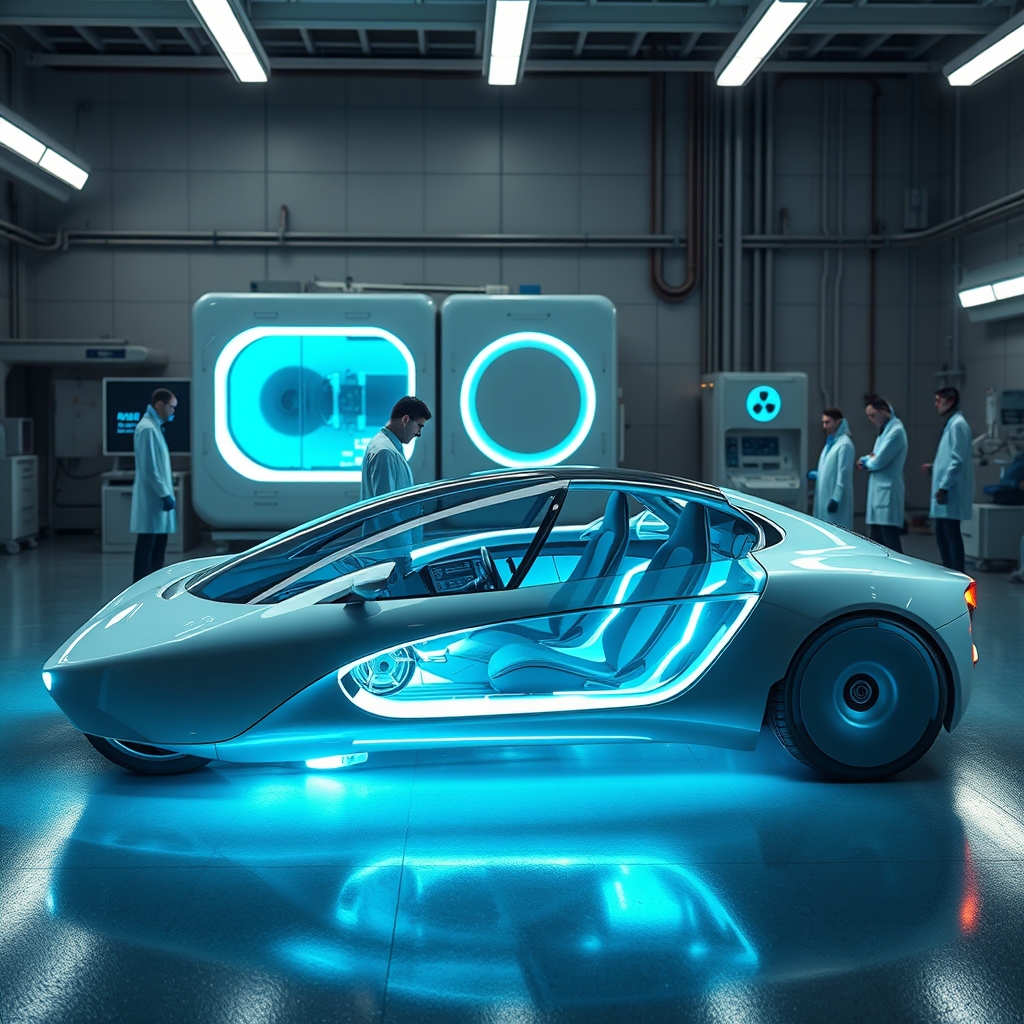
The idea of a car powered by nuclear energy might sound like science fiction, but the concept has been explored for decades—most famously in the 1950s with the Ford Nucleon Concept. While the world has since shifted toward electric vehicles (EVs) as the future of sustainable transportation, the limitations of battery technology—range anxiety, charging infrastructure, and material scarcity—have kept the door open for alternative solutions. One of the most radical yet compelling ideas is the uranium car battery, a fission-powered system that could redefine automotive endurance and energy independence.
The Science Behind Nuclear Automotive Propulsion
At the heart of a nuclear-powered vehicle lies a radioisotope thermoelectric generator (RTG) or a small modular reactor (SMR). Unlike conventional internal combustion engines or lithium-ion batteries, these systems generate electricity through nuclear fission—the splitting of uranium atoms to release heat, which is then converted into electrical energy. The key advantage? A single kilogram of uranium-235 contains roughly three million times more energy than the same mass of gasoline, offering unparalleled energy density.
In the 1950s and 60s, the U.S. government and automakers like Ford and Chrysler experimented with nuclear propulsion, envisioning cars that could travel for years without refueling. The Ford Nucleon, though never built, was designed to house a compact reactor in its trunk, with depleted uranium shielding to protect passengers from radiation. While the project was abandoned due to safety concerns and the rise of gasoline engines, modern advancements in micro nuclear reactor technology have revived the possibility of atomic-powered vehicles.
How a Uranium Car Battery Would Work
A fission-powered automobile would likely rely on a closed-loop nuclear propulsion system, where a small reactor heats a working fluid (such as molten salt or helium) to drive a turbine, generating electricity for an electric motor. Unlike traditional nuclear power plants, which require massive containment structures, a miniature nuclear reactor car would use advanced materials like depleted uranium shielding and passive safety mechanisms to prevent meltdowns.
One of the most promising approaches is the nuclear electric drive, where the reactor acts as a near-infinite battery, eliminating the need for frequent recharging. This could be particularly transformative for long-haul trucking, military vehicles, or even personal cars in remote areas where charging infrastructure is scarce. Imagine a vehicle that could drive from New York to Los Angeles on a single fuel pellet—no stops, no range anxiety, just uninterrupted travel.
The Challenges: Safety, Regulation, and Public Perception
Despite its potential, nuclear-powered transportation faces significant hurdles. The most obvious is radiation risk. While modern reactor designs are far safer than those of the mid-20th century, the idea of a car carrying fissile material raises concerns about accidents, terrorism, and nuclear proliferation. Regulatory frameworks would need to be completely overhauled to accommodate civilian nuclear vehicles, a process that could take decades.
Another major obstacle is public perception. The words “nuclear” and “car” in the same sentence evoke images of Chernobyl or Fukushima, making consumer acceptance a steep uphill battle. Automakers would need to invest heavily in education and transparency to convince drivers that a fission-powered automobile is not only safe but also a superior alternative to fossil fuels and batteries.
Could Nuclear Cars Coexist with EVs?
While electric vehicles dominate the conversation about sustainable transportation, they are not without flaws. Lithium-ion batteries degrade over time, require rare earth minerals with questionable supply chains, and still rely on electricity grids that may not be fully renewable. A nuclear battery technology car, on the other hand, could offer a truly zero-emission solution—assuming the reactor is properly contained and the fuel is sourced responsibly.
However, nuclear-powered vehicles would likely serve a niche market rather than replace EVs entirely. Long-distance trucking, military applications, and space exploration (where RTGs are already used) could be the first adopters. For everyday commuters, the regulatory and infrastructure challenges may prove too great—at least for now.
The Future of Atomic Energy Vehicles
Several startups and research institutions are already exploring small modular reactor propulsion for maritime and aviation applications, proving that compact nuclear power is no longer just a theoretical possibility. Companies like NuScale Power and TerraPower are developing SMRs that could one day be adapted for automotive use, while advancements in radioisotope power systems continue to improve efficiency and safety.
If these technologies mature, we may see a new era of self-powered nuclear cars—vehicles that never need refueling, produce no tailpipe emissions, and outlast their electric counterparts by decades. The road to atomic-powered transportation is long and uncertain, but the potential rewards—energy independence, unmatched endurance, and a true zero-emission future—make it a journey worth watching.
The dream of a car that runs on uranium may have been ahead of its time in the 1950s, but with today’s advancements in nuclear engineering, it’s no longer a question of if, but when. The next automotive revolution might not be electric—it could be atomic.