The Phantom Fleet: Why Nuclear-Powered Cars Remain a Dream on the Horizon
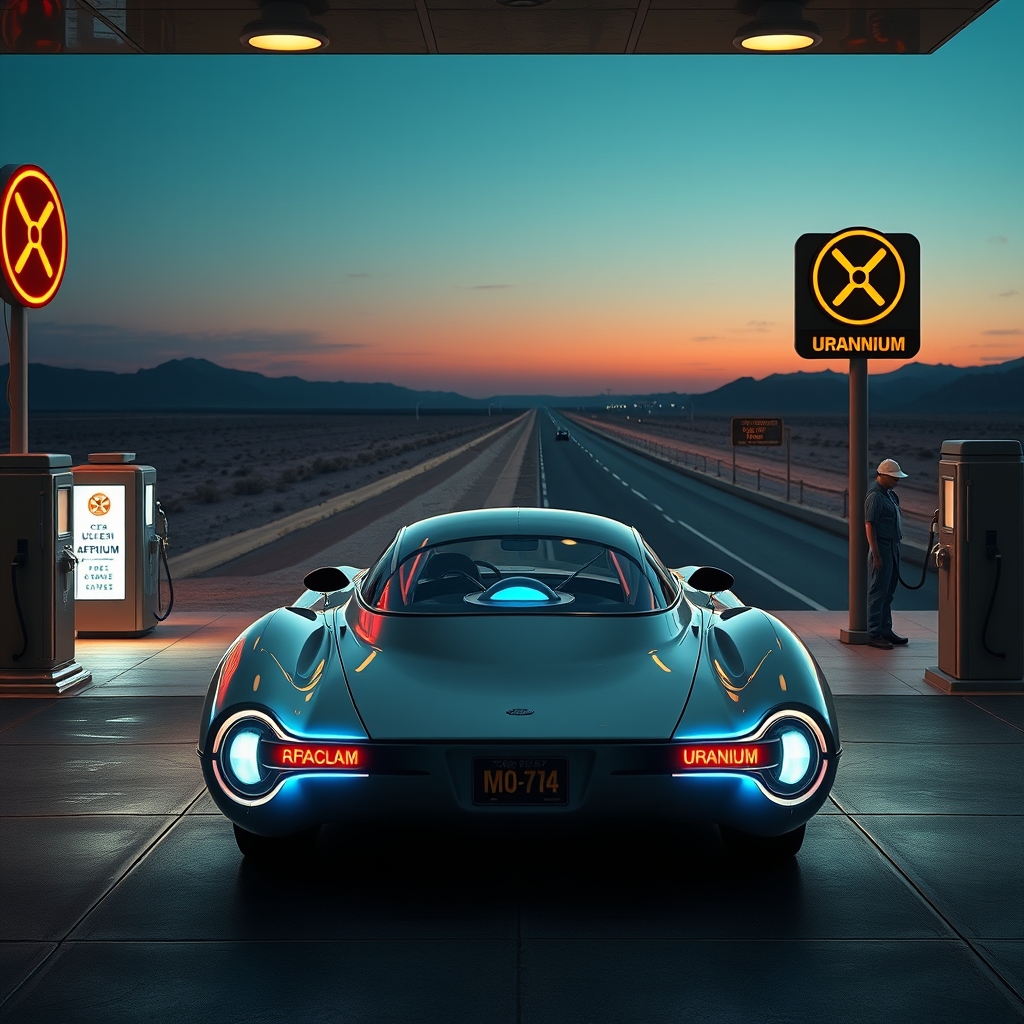
The idea of a car powered by nuclear energy has tantalized engineers, futurists, and science fiction writers for decades. It promises near-limitless range, zero emissions, and a break from the tyranny of fossil fuels. Yet, despite the allure, nuclear-powered vehicles remain firmly in the realm of speculation—more phantom than fleet. What happened to the atomic automobile, and why does it still feel just out of reach?
The Birth of a Radical Idea
The concept of nuclear-powered transportation wasn’t born in a vacuum. In the 1950s, the world was captivated by the potential of atomic energy. The Ford Nucleon, unveiled in 1958 as a scale model, became the poster child for this vision. With its sleek, futuristic design and a compact reactor tucked into the rear, the Nucleon promised a car that could travel 5,000 miles on a single uranium charge. Ford’s engineers imagined a world where drivers would simply swap out depleted fuel cartridges at service stations, much like filling up a tank of gasoline.
Around the same time, the U.S. military experimented with nuclear propulsion in projects like the Nuclear-Powered Aircraft Program, which, despite its impracticality, demonstrated the sheer ambition of the era. If planes could theoretically fly for years without refueling, why not cars? The logic seemed unassailable: nuclear energy was dense, powerful, and, in theory, clean. The automotive industry stood on the precipice of a revolution.
The Unsolvable Puzzle of Practicality
Yet, the dream quickly collided with reality. The first and most glaring obstacle was size. Even the smallest nuclear reactors of the 1950s were bulky, heavy, and required extensive shielding to protect passengers from radiation. The Ford Nucleon’s reactor, for instance, was never actually built—because no one had figured out how to miniaturize a reactor enough to fit in a car without turning it into a rolling fortress. Depleted uranium shielding, while effective, added tons of weight, making the vehicle impractical for everyday use.
Then there was the issue of safety. A car crash involving a nuclear-powered vehicle wasn’t just a fender-bender; it was a potential Chernobyl on wheels. The risk of a reactor breach, even in a minor collision, raised nightmarish scenarios of radioactive contamination. Regulatory bodies, already wary of nuclear energy’s dangers, would have demanded fail-safes so stringent that the cost and complexity would have made the cars prohibitively expensive.
The Radioisotope Alternative: A Glimmer of Hope?
Not all nuclear automotive concepts relied on full-fledged reactors. Some, like the Radioisotope Thermoelectric Generator (RTG), offered a more plausible path. RTGs, which convert heat from radioactive decay into electricity, have powered spacecraft like the Voyager probes and the Mars rovers for decades. In theory, an RTG could provide a car with a steady, low-power energy source for years without refueling.
Yet, RTGs come with their own set of challenges. Their power output is relatively low, making them unsuitable for high-performance vehicles. They also rely on isotopes like plutonium-238, which are expensive, tightly regulated, and politically contentious. While an RTG-powered car might never need a charge, the logistical hurdles of fueling and maintaining such a vehicle would be immense.
The Modern Revival: Small Modular Reactors and Beyond
Fast forward to the 21st century, and the dream of nuclear-powered cars hasn’t died—it’s just evolved. Advances in Small Modular Reactors (SMRs) and micro nuclear reactor technology have reignited interest in atomic propulsion. Companies like NuScale and TerraPower are developing reactors small enough to fit in a shipping container, raising the question: could a scaled-down version power a car?
The answer, for now, is still no. Even the smallest SMRs are designed for stationary power generation, not mobile applications. The challenges of shielding, safety, and regulatory approval remain as daunting as ever. However, the rise of nuclear battery technology—compact, long-lasting power sources based on radioactive decay—offers a tantalizing middle ground. These batteries, while not powerful enough to propel a car, could extend the range of electric vehicles by decades, bridging the gap between conventional batteries and full nuclear propulsion.
The Psychological Barrier: Would Anyone Actually Drive One?
Even if the technical hurdles were overcome, there’s another question: would consumers embrace nuclear-powered cars? The public’s relationship with nuclear energy is fraught with fear and misunderstanding. High-profile disasters like Chernobyl and Fukushima have left a lasting stigma, making it difficult to imagine drivers willingly sitting atop a miniature reactor. The automotive industry thrives on consumer confidence, and nuclear power, for all its benefits, remains a hard sell.
That said, the tide may be turning. As climate change accelerates and the limitations of battery-electric vehicles become apparent, the idea of a long-range nuclear car is gaining traction among futurists. Elon Musk once quipped that nuclear-powered cars were “a great idea in theory,” and while Tesla has no plans to pursue them, the comment underscores the enduring appeal of the concept. If battery technology plateaus and fossil fuels become even more untenable, the atomic automobile might yet have its day.
The road to a nuclear-powered car is littered with obstacles, from engineering challenges to regulatory nightmares. Yet, the dream persists because it represents something profound: the ultimate liberation from energy constraints. Whether through closed-loop nuclear propulsion, radioisotope power systems, or some yet-to-be-invented breakthrough, the atomic automobile remains a symbol of humanity’s relentless pursuit of the impossible. For now, it lingers in the realm of the hypothetical, a tantalizing vision of what could be—if only the world were ready to embrace it.