The Endless Road: How Nuclear Propulsion Could Eliminate Range Anxiety Forever
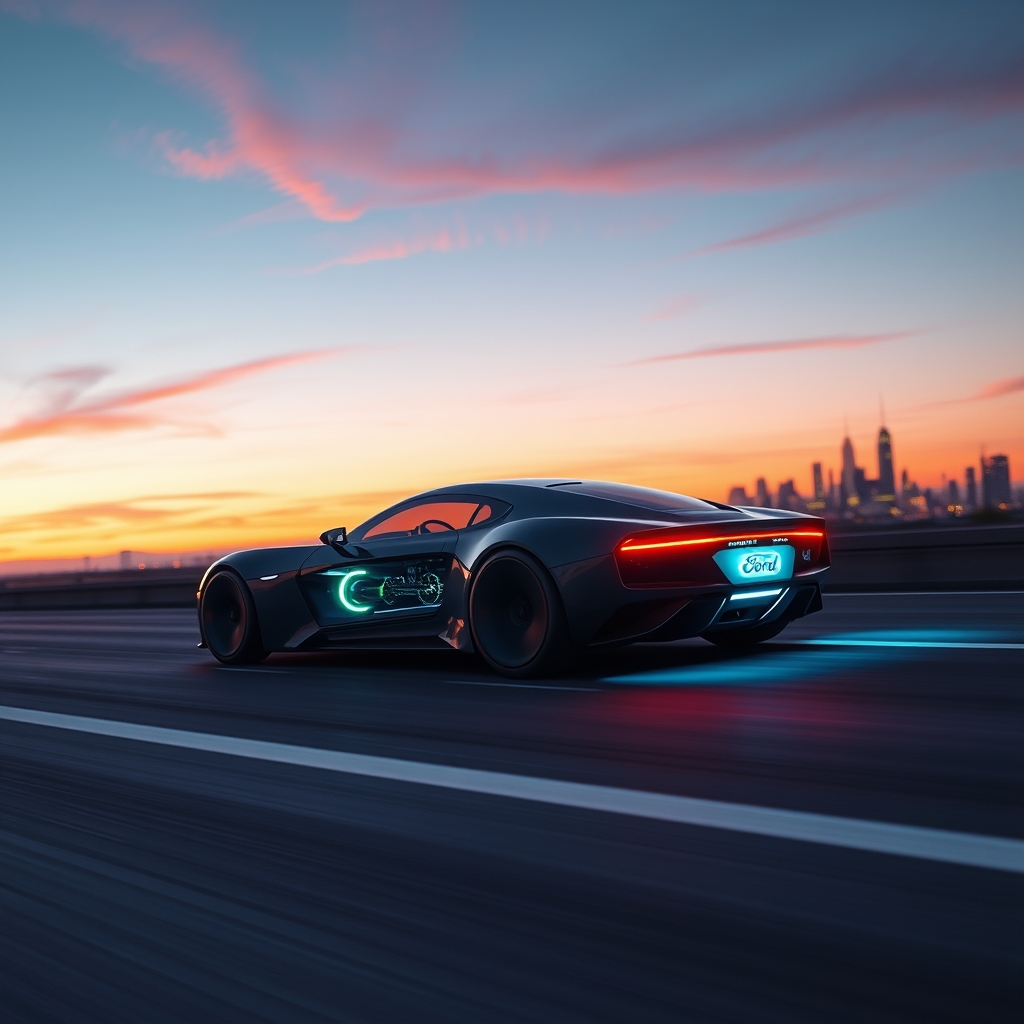
The idea of a car that never needs refueling sounds like science fiction, yet the principles behind nuclear-powered vehicles have existed for decades. From the bold visions of the 1950s to the cutting-edge research of today, the dream of harnessing atomic energy for personal transportation has never truly faded. While electric vehicles dominate the conversation about sustainable mobility, a quieter revolution is brewing—one that could render range anxiety obsolete and redefine what it means to drive.
The Legacy of the Ford Nucleon: A Dream Deferred
In 1958, Ford unveiled the Nucleon, a concept car that promised to revolutionize the automotive industry. Unlike anything before it, the Nucleon was designed to run on a small nuclear reactor, tucked neatly behind the passenger cabin. The reactor would heat a steam generator, powering turbines that drove the wheels. Ford’s engineers envisioned a future where drivers could travel thousands of miles without stopping, swapping out depleted uranium cartridges at service stations much like filling up a gas tank. The Nucleon was never built, but its legacy endures as a symbol of what might have been—and what still could be.
The Nucleon’s design was a product of its time, a period when atomic energy was seen as the key to unlocking a utopian future. Yet, despite its optimistic vision, the challenges of nuclear propulsion were immense. Safety concerns, regulatory hurdles, and the sheer complexity of miniaturizing a reactor for a consumer vehicle ultimately grounded the Nucleon before it ever left the drawing board. But the questions it raised remain relevant today: Could nuclear power ever be safe, practical, and scalable enough for everyday use?
The Science Behind Nuclear Automotive Propulsion
At the heart of nuclear-powered vehicles lies the same principle that drives nuclear submarines and spacecraft: controlled fission. In a fission-powered automobile, a small modular reactor (SMR) or a radioisotope thermoelectric generator (RTG) would convert nuclear energy into electricity or mechanical power. Unlike traditional internal combustion engines, which rely on finite fossil fuels, nuclear propulsion offers an almost limitless energy source. A single kilogram of uranium-235, for example, contains roughly 80 terajoules of energy—enough to power a car for millions of miles.
Radioisotope Thermoelectric Generators: The Quiet Workhorse
RTGs are already in use today, powering deep-space probes like NASA’s Voyager and Perseverance rover. These devices generate electricity through the natural decay of radioactive isotopes, such as plutonium-238. While RTGs produce relatively low power outputs, their reliability and longevity make them ideal for applications where maintenance is impossible. For automotive use, an RTG could provide a steady trickle of electricity to charge a battery, extending the range of an electric vehicle indefinitely. The challenge lies in scaling up the technology to meet the energy demands of a passenger car while ensuring safety and efficiency.
Small Modular Reactors: The Next Frontier
SMRs represent a more ambitious approach to nuclear propulsion. These compact reactors, designed for modular deployment, could theoretically power everything from ships to remote communities. For automotive applications, an SMR would need to be drastically miniaturized while maintaining safety and efficiency. Companies like NuScale and TerraPower are already developing SMRs for grid power, but adapting them for vehicles presents unique challenges. Shielding, heat dissipation, and regulatory approval are just a few of the hurdles that would need to be overcome. Yet, if successful, SMRs could offer a level of energy density unmatched by any other power source.
The Challenges: Safety, Regulation, and Public Perception
Despite the theoretical advantages of nuclear propulsion, the road to adoption is fraught with obstacles. Safety is the most pressing concern. Nuclear reactors produce radiation, and even the smallest leak could have catastrophic consequences. Modern designs, such as molten salt reactors or pebble-bed reactors, offer passive safety features that could mitigate these risks, but public skepticism remains a significant barrier. The specter of Chernobyl and Fukushima looms large in the collective consciousness, making it difficult to imagine nuclear-powered cars sharing the road with conventional vehicles.
Regulation is another major hurdle. Nuclear energy is one of the most tightly controlled industries in the world, and for good reason. Introducing nuclear reactors into consumer vehicles would require an entirely new regulatory framework, one that balances innovation with safety. Governments and international bodies would need to collaborate to establish standards for reactor design, fuel handling, and waste disposal. The process would be slow and contentious, but not impossible.
The Future: A Hybrid Approach to Nuclear Mobility
Given the challenges, the most plausible path forward may lie in hybrid systems that combine nuclear power with existing technologies. For example, a small RTG could supplement a traditional electric vehicle, extending its range without the need for frequent charging. Alternatively, a closed-loop nuclear propulsion system could generate electricity on demand, powering an electric drivetrain while eliminating the need for large battery packs. These hybrid approaches could offer a middle ground, providing the benefits of nuclear energy without the full complexity of a standalone reactor.
Another promising avenue is the development of nuclear battery technology. Unlike traditional batteries, which store energy chemically, nuclear batteries convert radioactive decay directly into electricity. These devices, also known as betavoltaics, are already used in niche applications like pacemakers and space probes. While current nuclear batteries are too weak for automotive use, advances in materials science could one day make them a viable power source for cars. Imagine a vehicle with a battery that lasts decades, never needs charging, and produces no emissions—this is the promise of nuclear battery technology.
As the world grapples with climate change and the limitations of fossil fuels, the idea of nuclear-powered vehicles is experiencing a quiet resurgence. Researchers, startups, and even some automakers are revisiting the concept, exploring new materials, designs, and safety protocols. While the road ahead is long and uncertain, the potential rewards are immense. A car that never needs refueling, produces no emissions, and can travel anywhere on Earth without infrastructure is not just a dream—it’s a possibility. The question is not whether nuclear propulsion will ever power our vehicles, but when. And when it does, it will change everything.