The Atomic Odyssey: How Nuclear Propulsion Could Unlock a New Era of Self-Powered Mobility
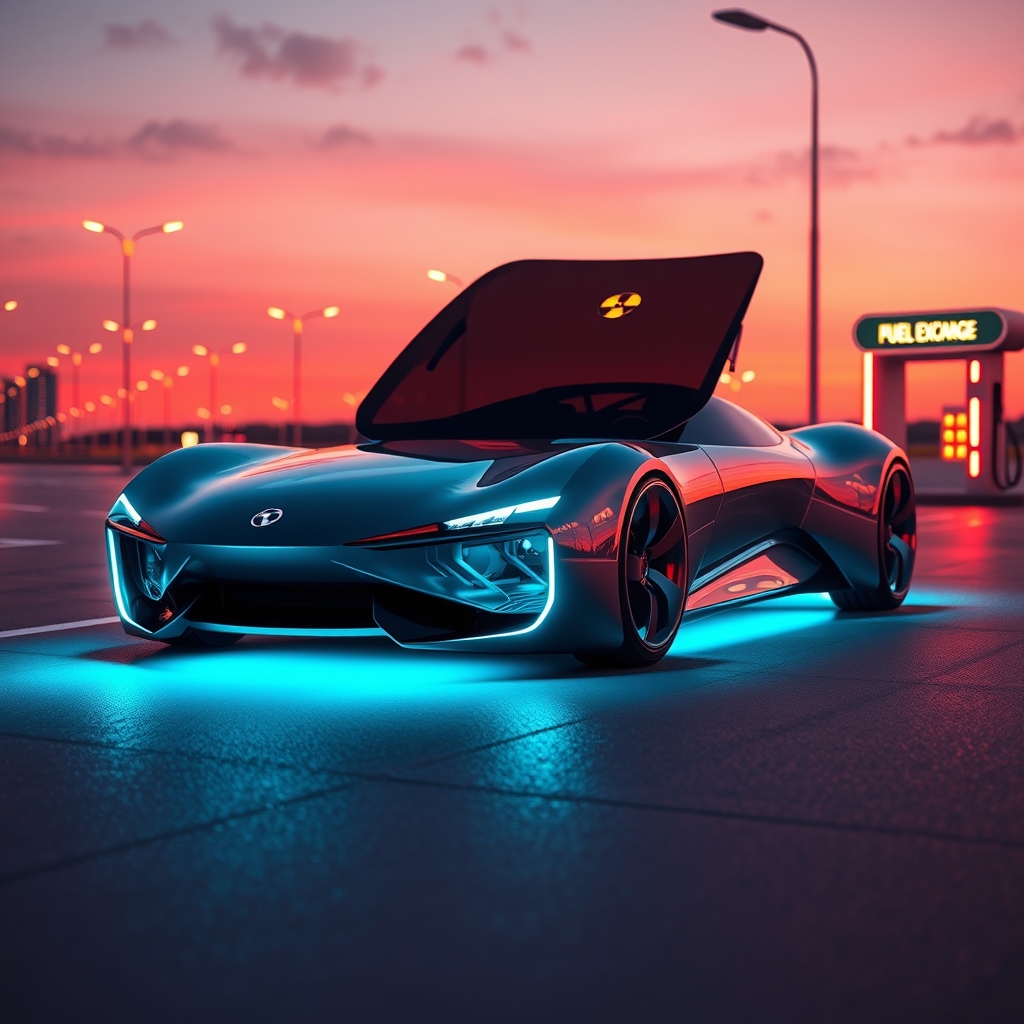
The idea of a vehicle powered by nuclear energy has long captivated engineers, futurists, and science fiction enthusiasts alike. From the sleek, futuristic designs of the 1950s to the cutting-edge research of today, the concept of a nuclear-powered vehicle represents the ultimate fusion of innovation and endurance. But how close are we to turning this vision into reality, and what technological breakthroughs could finally make atomic mobility a part of our daily lives?
The Legacy of the Ford Nucleon Concept
In 1958, Ford unveiled the Ford Nucleon Concept, a car that promised to revolutionize transportation by replacing gasoline with a small modular reactor propulsion system. The design was radical: a compact nuclear reactor in the trunk, powering the vehicle for thousands of miles without refueling. Though the Nucleon never made it past the prototype stage, it planted the seed for a future where cars could run on the same energy that powers stars.
Decades later, the dream persists. Modern advancements in miniature nuclear reactor technology and radioisotope thermoelectric generators (RTGs) have brought us closer than ever to a viable atomic-powered engine. Unlike traditional combustion engines, a nuclear-powered system could theoretically operate for years—or even decades—without needing a recharge, making it an ideal solution for long-haul transportation, space exploration, and even personal vehicles.
The Science Behind Nuclear Automotive Propulsion
At the heart of nuclear propulsion lies the principle of fission-powered energy. In a conventional nuclear reactor, uranium atoms split apart, releasing vast amounts of heat. This heat is then converted into electricity, which can drive an electric motor. For automotive applications, the challenge has always been miniaturization—creating a reactor small enough to fit inside a car while remaining safe and efficient.
One promising approach is the radioisotope power system (RPS), which uses the natural decay of radioactive materials like plutonium-238 to generate electricity. Unlike fission reactors, RPS units have no moving parts, making them highly reliable. NASA has already used similar technology to power spacecraft like the Voyager probes and the Mars rovers. If scaled down further, an RPS could theoretically provide a self-powered nuclear car with an almost limitless range.
The Role of Small Modular Reactors
Another avenue of exploration is small modular reactors (SMRs), which are compact, factory-built nuclear reactors designed for scalability. While SMRs are typically envisioned for grid power or industrial use, some researchers believe they could be adapted for automotive propulsion. The key advantage of SMRs is their ability to generate large amounts of power in a relatively small footprint, making them a potential game-changer for nuclear electric drive systems.
However, safety remains a critical concern. Nuclear reactors produce radiation, and shielding passengers from harmful exposure is non-negotiable. Depleted uranium shielding has been proposed as a solution, as it is dense enough to block radiation while being lighter than traditional lead shielding. Still, the logistics of integrating such a system into a consumer vehicle present significant engineering hurdles.
The Challenges of Bringing Nuclear Cars to Market
Despite the theoretical benefits, several obstacles stand in the way of widespread nuclear automotive propulsion. Regulatory approval is perhaps the most daunting. Nuclear energy is heavily regulated due to safety and proliferation risks, and convincing authorities to approve a consumer-grade nuclear reactor would require unprecedented levels of scrutiny.
Public perception is another major hurdle. The mere mention of nuclear power often evokes fears of meltdowns, radiation leaks, and environmental disasters. Overcoming this stigma would require not only robust safety measures but also a concerted effort to educate the public on the differences between nuclear weapons and controlled, civilian nuclear energy.
Economic and Infrastructure Considerations
The cost of developing and manufacturing nuclear-powered vehicles would likely be prohibitive in the short term. Unlike electric cars, which can leverage existing infrastructure, nuclear vehicles would require entirely new supply chains, fueling stations, and maintenance protocols. Additionally, the disposal of radioactive waste—even in small quantities—would necessitate specialized facilities and procedures.
Yet, the potential rewards are immense. A long-range nuclear car could eliminate the need for frequent refueling, drastically reducing downtime for commercial fleets. For personal vehicles, the ability to drive for years without recharging could make road trips and cross-country travel more convenient than ever. And in remote or off-grid locations, a nuclear battery technology-powered vehicle could provide reliable transportation where traditional fuel sources are scarce.
The Future of Atomic Mobility
While a nuclear-powered car may still seem like science fiction, the rapid pace of technological advancement suggests that it may not remain so forever. Companies and research institutions are already exploring closed-loop nuclear propulsion systems, which recycle nuclear fuel to maximize efficiency and minimize waste. Meanwhile, breakthroughs in materials science could lead to lighter, more effective radiation shielding, making nuclear vehicles safer and more practical.
Perhaps the most exciting possibility is the convergence of nuclear propulsion with other emerging technologies. Imagine a self-powered nuclear car equipped with autonomous driving capabilities, capable of navigating vast distances without human intervention. Or a fleet of nuclear-powered trucks, revolutionizing logistics by eliminating the need for fuel stops. The potential applications are as vast as they are transformative.
As we stand on the brink of a new era in transportation, the dream of atomic mobility is inching closer to reality. The road ahead is fraught with challenges, but the rewards—unlimited range, unparalleled endurance, and a drastic reduction in fossil fuel dependence—could redefine what it means to travel. Whether through radioisotope power systems, small modular reactors, or some yet-to-be-discovered innovation, the future of automotive propulsion may well be written in the language of atoms. And when that day comes, the roads we drive on today will seem as quaint and outdated as the horse-drawn carriages of the past.